

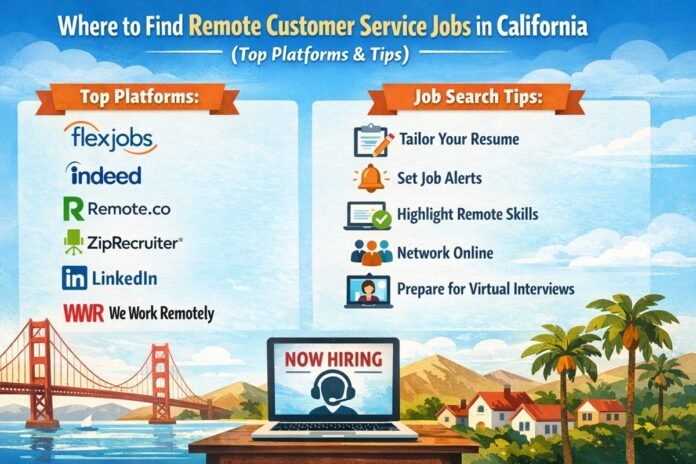
California is one of the most active states in the country for remote customer service jobs, and the opportunities are only expanding in 2026. E-commerce companies, healthcare providers, SaaS platforms, and financial institutions are all building remote support teams, and they need reliable, communicative agents to fill those roles.
For job seekers, the challenge is rarely a shortage of openings. The real challenge is knowing where to find remote customer service jobs in California and how to approach the search strategically. With dozens of platforms, company portals, and job boards available, it is easy to waste time in the wrong places.
This guide solves that problem. You will learn the best platforms to use, how to search effectively, what skills employers want, and how to apply in a way that gets results. Whether you are starting fresh or looking to upgrade your current role, this is your complete roadmap.
Why Remote Customer Service Jobs Are in High Demand
Understanding why this market is growing helps you approach your job search with confidence. Several factors are driving the surge in remote call center jobs in California and virtual support roles across the country:
- Growth of digital businesses: Online shopping, app-based services, and subscription platforms all require customer support infrastructure. As these businesses scale, so does their need for remote agents.
- Shift to distributed support teams: Companies have realized that remote agents are just as effective as in-office staff, often more so, because they experience less burnout and turnover when given schedule flexibility.
- Cost efficiency for employers: Running a physical call center is expensive. Remote teams eliminate those overhead costs while allowing companies to hire from a larger talent pool across California and beyond.
- Employee preference: Workers consistently choose remote roles over in-office equivalents when both options are available. Offering remote positions helps companies attract and retain better candidates.
- Bilingual demand: California’s diverse population makes it a prime hiring ground for bilingual agents, particularly Spanish-English speakers, who can earn a premium above standard rates.
The combination of these factors means that work from home customer support jobs are not a temporary trend. They are now a standard part of how major companies operate.
Best Platforms to Find Remote Customer Service Jobs in California
Not all job boards are equally useful for remote customer service searches. Here is a breakdown of the most effective platforms, organized by type.
General Job Boards
These platforms carry the highest volume of listings and are a good starting point for any job search.
Indeed is the largest job search engine in the USA and one of the best places to find remote customer service jobs in California. To search effectively, type “remote customer service” in the keyword field and select “Remote” under the location filter. Sort results by “Date Posted” to see the newest listings first. Save your search and enable email alerts so new postings reach your inbox daily. Indeed also allows you to upload your resume so employers can find you directly.
LinkedIn Jobs is particularly useful for connecting job searching with professional networking. Use the job search bar with keywords like “virtual customer support” or “home based customer service” and apply the “Remote” location filter. Set up daily job alerts for your target role. LinkedIn also lets you see if you have any connections at a company before you apply, which can be a real advantage when reaching out for a referral.
Glassdoor combines job listings with company reviews written by current and former employees. This makes it valuable not just for finding jobs but for evaluating employers before you invest time in an application. Search for remote customer service roles and read company ratings, interview experiences, and salary data to make informed decisions about where to apply.
Remote-Specific Job Platforms
These platforms are built exclusively for remote job seekers, which means every listing on them is remote-eligible. They tend to attract higher-quality postings with more detail and fewer scams than general boards.
FlexJobs is a paid subscription service that manually vets every single listing before it goes live. This means you will never encounter a scam, misleading posting, or outdated listing on FlexJobs. It is the safest and most curated platform for finding online customer service jobs in the USA. A monthly subscription costs around $10 to $15 and pays for itself quickly when it helps you land even one quality interview.
Remote.co is a free platform that curates remote job listings across a wide range of industries. It has a dedicated customer service and support category that is updated regularly. Listings come from reputable employers and often include detailed role descriptions, making it easier to tailor your application accurately.
We Work Remotely is one of the most popular remote-only job boards in the USA. The customer support section frequently features listings from technology companies, SaaS platforms, and e-commerce brands looking for California-eligible agents. Job seekers can browse for free and apply directly through employer links.
Remote OK aggregates remote job listings from multiple sources and organizes them by category, salary, and required skills. You can filter specifically for customer service or support roles and see estimated salary ranges upfront, which saves time during the evaluation process. It is fully free to use and updated in real time.
Company Career Pages
Applying directly through a company’s official careers page is one of the most underused strategies in remote job searching. Many companies post roles on their own sites before listing them on job boards, which means you can apply before the competition discovers them.
Amazon posts remote customer service roles on its Jobs portal regularly. Search for “customer service” and filter by “Remote” to find positions open to California residents. Amazon hires frequently and at scale, which means the chances of finding an open role at any given time are high.
Apple hires At Home Advisors through its dedicated careers page. Search for “At Home Advisor” to find current openings in customer service and technical support. These roles come with strong benefits and equipment provided by Apple, making them highly competitive.
Concentrix runs an active remote hiring program and posts new positions regularly on its careers site. Filter by “Work at Home” under the location type to find remote roles available for California applicants across a variety of industries.
LiveOps operates through its own agent portal rather than a traditional job board. You create a free account, complete a certification process, and then choose from available client programs. This is ideal for those who want contractor flexibility and the ability to set their own hours.
How to Search Effectively on Job Platforms
Using a job platform without a clear strategy leads to wasted time and missed opportunities. Follow these steps to search smarter:
- Use the right keywords: Instead of just “customer service,” try variations like “remote customer support,” “virtual support agent,” “work from home call center,” or “home based customer service jobs.” Different companies use different terminology, and broader searches surface more options.
- Apply filters aggressively: Always filter by “Remote” under location. Also filter by job type (full-time, part-time, contract) and experience level to narrow results to what actually fits your situation.
- Set job alerts on every platform: Do not rely on checking boards manually every day. Set up email or push notification alerts on Indeed, LinkedIn, and Remote.co so new listings come to you automatically. Speed of application matters significantly.
- Apply early: Recruiters often review the first batch of applicants within 24 to 48 hours of a posting going live. Applying on the day a job is posted puts you in that first group and improves your chances of getting a callback.
Skills You Need to Get Hired
Technical Skills
- CRM tools: Zendesk, Salesforce, and Freshdesk are the most commonly listed tools in remote customer service job postings. Free training is available for all three online. Adding even basic proficiency to your resume makes a measurable difference.
- Chat and ticketing systems: Platforms like Intercom, Help Scout, and LiveChat are used heavily in e-commerce and SaaS customer support roles. Familiarity with at least one of these shows employers you can get up to speed quickly.
- Basic computer skills: You should be comfortable navigating multiple browser tabs, typing at 40 or more words per minute, and using standard tools like Google Workspace or Microsoft Office without assistance.
Soft Skills
- Communication: The ability to explain solutions clearly and professionally, both in writing and over the phone, is the most important skill in any customer service role. Every employer tests for this during the interview.
- Problem solving: Customers reach out when something has gone wrong. Thinking quickly, staying calm, and finding practical solutions without escalating every issue is what separates good agents from great ones.
- Empathy: Responding to a frustrated customer with genuine understanding, rather than scripted indifference, directly impacts satisfaction scores and customer retention. Employers screen for this in behavioral interview questions.
- Time management: Working from home means managing your own productivity without direct supervision. Meeting response time targets, handling a ticket queue, and staying on task throughout a shift requires real discipline.
Step-by-Step Guide to Applying for Remote Customer Service Jobs
- Create a tailored resume: Do not use the same resume for every application. Read each job description carefully and adjust your resume to reflect the specific skills, tools, and experience the employer is asking for. Use exact language from the posting where relevant.
- Write a strong cover letter: Keep it to three short paragraphs. In the first, state the role and why you want it. In the second, highlight one or two specific experiences that make you a strong fit. In the third, invite them to schedule an interview and thank them for their time.
- Apply consistently: Set a weekly goal of 10 to 15 applications and stick to it. Inconsistent application habits are one of the biggest reasons job searches stall. Treat it like a part-time job.
- Track your applications: Keep a simple spreadsheet with the company name, role, date applied, and current status. This helps you avoid applying twice to the same position and makes follow-up much easier to manage.
- Follow up professionally: If you have not heard back after 7 to 10 business days, send a brief follow-up email to the recruiter or hiring manager. Express continued interest, reference the role you applied for, and keep it under five sentences.
Resume Tips That Improve Your Chances
- Use role-specific keywords: Phrases like “inbound customer support,” “CRM proficiency,” “ticket resolution,” and “remote call center” help your resume pass through applicant tracking systems before a human ever reads it
- Highlight achievements with numbers: Quantified accomplishments stand out strongly. For example, “Resolved 75 customer tickets daily with a 97% satisfaction score” is far more compelling than “Handled customer inquiries”
- Keep formatting clean: Use a one-page layout with clear section headers, consistent fonts, and adequate white space. Avoid graphics, columns, or tables that can confuse automated resume screening tools
- Show remote work readiness: If you have prior remote work experience, list it explicitly. If not, include a brief note about your home office setup, internet speed, and any tools you are familiar with. This addresses a common concern employers have about first-time remote hires.
Interview Tips for Remote Roles
- Prepare for common customer service questions: Practice answers to questions like “How do you handle a customer who is upset?”, “Describe a time you went above and beyond for a customer,” and “How do you stay productive working independently from home?”
- Practice scenario-based responses: Use the STAR method (Situation, Task, Action, Result) to structure your answers. This format makes your responses clear, concise, and memorable for interviewers reviewing multiple candidates.
- Ensure a professional setup: Choose a quiet room with a neutral or tidy background. Good lighting, a working camera, and a reliable headset make a strong first impression before you even speak.
- Test your internet and tools: Run a speed test, check your microphone audio, and confirm your video software is working at least one day before the interview. Technical problems during an interview for a remote role send a poor signal to employers.
Salary Expectations in California
California wages for remote customer service roles are consistently above the national average, reflecting the state’s higher cost of living and minimum wage requirements:
- Entry level: $16 to $22 per hour, or approximately $33,000 to $46,000 per year. Most entry-level roles include paid training, and some employers provide equipment or internet stipends.
- Mid level: $22 to $32 per hour, or $46,000 to $66,000 per year. Candidates with 2 to 4 years of relevant experience, tool proficiency, and a track record of strong satisfaction scores typically fall in this bracket.
- Experienced roles: $32 to $50 per hour, or $66,000 to $104,000 per year for senior agents, team leads, customer success managers, and technical support specialists at technology companies.
- Bonuses and incentives: Performance bonuses, customer satisfaction bonuses, and annual merit increases are common across mid-to-large employers. Bilingual Spanish-English agents frequently earn an additional $1 to $4 per hour above the stated base rate.
Common Mistakes to Avoid
- Applying with generic resumes: Sending the same document to every employer without customization is the fastest way to get filtered out. Tailor every application to the specific role and company.
- Ignoring job descriptions: Every job posting is a detailed brief on exactly what the employer wants. Candidates who ignore this and rely on generic talking points miss obvious opportunities to align their application with hiring priorities.
- Lack of preparation: Showing up to a customer service interview without practicing your answers, researching the company, or testing your tech setup signals to the employer that you will approach the job the same way.
- Applying inconsistently: Submitting 30 applications in one week and then going quiet for two weeks will not generate steady results. A structured, consistent approach spread over several weeks produces far better outcomes.
Tips to Get Hired Faster
- Learn CRM tools: Zendesk offers free hands-on training through its official learning portal. Completing even the basics and adding it to your resume immediately separates you from candidates with no tool experience.
- Take short certifications: HubSpot Academy, Coursera, and LinkedIn Learning all offer free or low-cost customer service certifications that take just a few hours. These signal commitment and readiness to employers screening applications.
- Practice mock interviews: Record yourself answering common interview questions on your phone or laptop. Watch the playback and adjust your pace, tone, and clarity before the real interview. Most candidates skip this step entirely, which is exactly why it gives you an edge.
- Apply early to new listings: Recruiters reviewing a new posting often reach out to the first 50 to 100 applicants before the role gains traction on job boards. Applying within 24 to 48 hours of a listing going live puts you in that priority group.
Conclusion
Knowing where to find remote customer service jobs in California is the first and most important step in a successful job search. The best platforms, including Indeed, LinkedIn, FlexJobs, Remote.co, We Work Remotely, and direct company career pages, all offer real opportunities right now. The candidates who get hired are the ones who search strategically, apply consistently, and prepare thoroughly at every stage.
To recap: use the right platforms with the right filters, build tailored applications for each role, develop your CRM skills, and treat your job search like a structured process rather than a sporadic effort. The market for work from home customer support jobs in California is active and growing. Roles are being posted every day across the platforms covered in this guide.
Start today. Pick two or three platforms from this list, set up your job alerts, refine your resume, and submit your first round of applications this week. Consistent action is what turns a job search into a job offer.
